

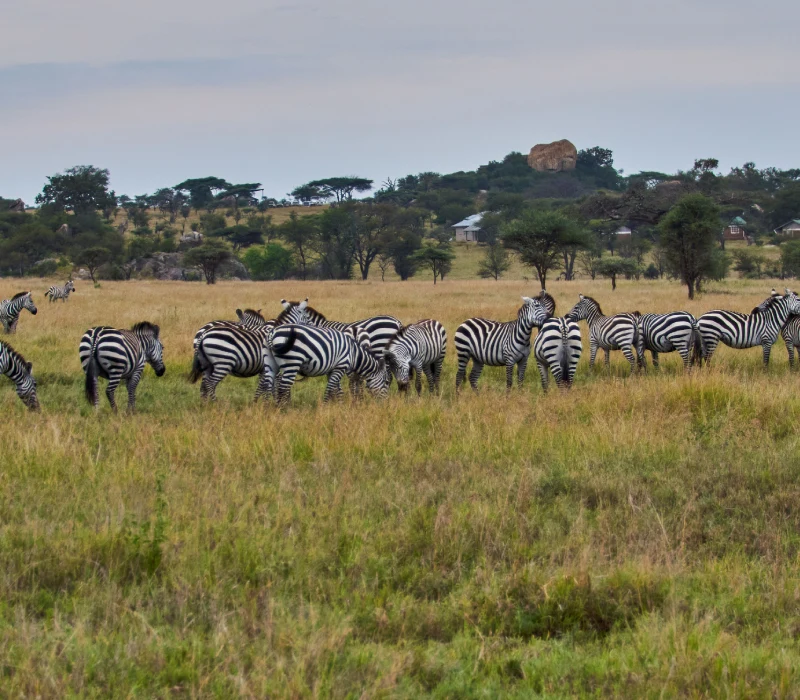
Destination spotlight
Serengeti
Explore Serengeti National Park, Tanzania's iconic wilderness, renowned for vast savannahs, exceptional wildlife, big cats and the annual wildebeest migration across the Serengeti-Mara ecosystem.
Destination
Travel experiences in Serengeti
Popular packages
Showing 0 packagesAll packages loaded for this destination.
Guide
About Serengeti
The park supports an extraordinary variety of wildlife, including lions, leopards, cheetahs, elephants, buffaloes, giraffes, hippos and numerous antelope species. Its diverse habitats include open grasslands, woodlands, rivers and kopjes, creating conditions that support both resident and migratory wildlife.
The Great Wildebeest Migration is one of Serengeti's defining natural phenomena. The movement follows seasonal rainfall and the availability of fresh grazing, with animals moving through different parts of the Serengeti and into Kenya's Maasai Mara.
A Serengeti safari can include game drives, wildlife photography and exploration of different regions of the park. Serengeti can also be combined with Tanzania's Ngorongoro Conservation Area, Tarangire National Park and other northern-circuit destinations.
Serengeti National Park
Serengeti National Park is one of Tanzania's most important protected areas and one of the world's most celebrated wildlife destinations. Located in northern Tanzania, the park forms part of the extensive Serengeti-Mara ecosystem, which extends northwards into Kenya's Maasai Mara National Reserve.
Established in 1951, Serengeti National Park covers approximately 14,763 square kilometres and is the largest component of the wider Serengeti ecosystem. UNESCO inscribed the Serengeti National Park as a World Heritage Site in 1981 because of its exceptional natural values and importance for large-scale wildlife migrations.
Wildlife in Serengeti
A Serengeti safari offers opportunities to observe a remarkable diversity of African wildlife. The park supports large populations of wildebeest, zebras and gazelles alongside major predators such as lions, leopards and cheetahs.
Other species found across the ecosystem include elephants, buffaloes, giraffes, hippos, hyenas and numerous antelope species. The exact wildlife encountered during a game drive depends on the season, location and natural movements of animals.
Serengeti's landscape is particularly well suited to wildlife viewing because extensive open plains allow animals to be observed across relatively unobstructed terrain.
For travelers planning a wider East African safari, Serengeti can be paired with Maasai Mara National Reserve, creating an itinerary that follows the ecological connection between Kenya and Tanzania.
The Great Wildebeest Migration
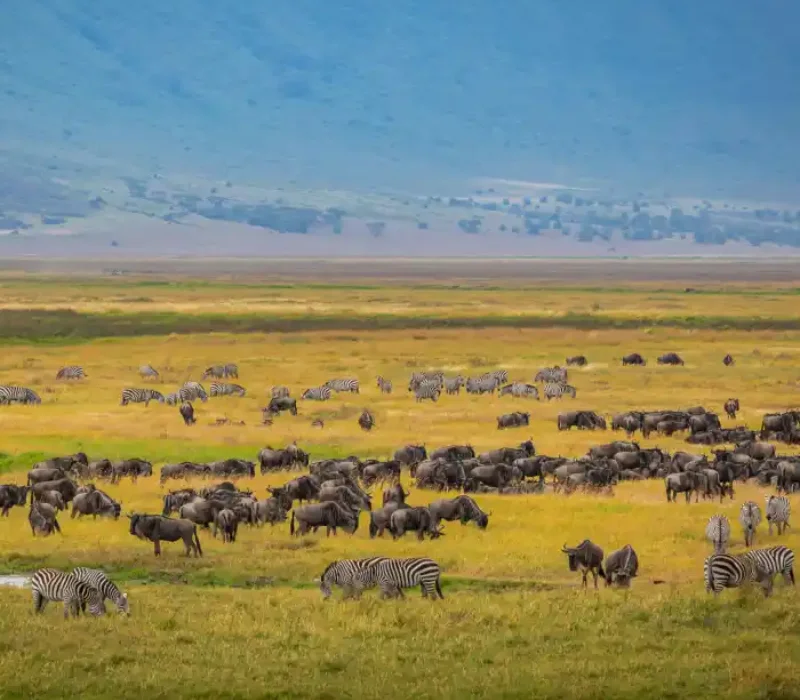
The Great Wildebeest Migration is perhaps the most famous natural phenomenon associated with Serengeti. Each year, enormous numbers of wildebeest, accompanied by zebras and other grazing animals, move through the Serengeti-Mara ecosystem in response to seasonal rainfall and the availability of fresh pasture.
The migration is not a single event occurring on a fixed date. Instead, it is a continuous ecological cycle in which animals move between grazing areas and water sources throughout the year.
During different stages of the migration, travelers may witness large herds crossing open plains, river crossings or concentrations of animals in particular areas. The precise location of the herds changes from year to year depending on environmental conditions.
This seasonal movement also supports the ecosystem's predators, creating opportunities to observe interactions between herbivores and carnivores.
Serengeti's Landscape
Serengeti's name is commonly associated with the idea of an "endless plain," reflecting the expansive grasslands that characterize much of the ecosystem.
However, the park contains considerably more than open plains. Its habitats include savannah grasslands, woodlands, riverine areas and rocky kopjes. These different environments provide shelter, water and food for a wide variety of species.
The granite kopjes scattered across parts of the plains are particularly distinctive features of the Serengeti landscape. They can provide elevated viewpoints for predators and shelter for various animals.
Serengeti Safari Experiences
The principal way to explore Serengeti National Park is through guided game drives. These allow visitors to explore different habitats while searching for wildlife and learning about the ecosystem from experienced guides.
Wildlife photography is another major attraction. The combination of open plains, large mammals and dramatic African landscapes provides numerous opportunities for photography.
Depending on the safari itinerary and accommodation, visitors may explore different sections of the park, including the central Seronera area, the western corridor and the northern Serengeti.
For travelers interested in experiencing the wider region, Serengeti can form part of a Tanzania safari incorporating destinations such as Ngorongoro Conservation Area, Tarangire National Park and Lake Manyara.
Serengeti and the Maasai Mara
Serengeti and Kenya's Maasai Mara are not separate ecological systems in the conventional sense. They form part of the same interconnected Serengeti-Mara ecosystem, with wildlife moving across the Kenya-Tanzania border.
This ecological connection is particularly important during the wildebeest migration. Animals move between Tanzania and Kenya according to seasonal conditions, rather than following political boundaries.
This makes it possible to design an East African safari that combines the two destinations, giving travelers the opportunity to experience different sections of one of Africa's most important wildlife ecosystems.
You can explore Wild Plush Safaris' destination collection for other destinations that can potentially be incorporated into a broader East African itinerary.
Planning a Serengeti Safari
The best Serengeti itinerary depends on what you want to experience. Travelers interested in the migration may plan around seasonal wildlife movements, while those primarily interested in general game viewing can explore different areas of the park throughout the year.
Because wildlife movements are influenced by rainfall and ecological conditions, migration locations should not be treated as guaranteed on specific dates.
For authoritative information about Tanzania's protected areas and visitor regulations, travelers can consult Tanzania National Parks. UNESCO also provides detailed information about the park's outstanding ecological and conservation significance through its Serengeti National Park World Heritage listing
Map
Serengeti map
-2.333333, 34.833333
Destination FAQs
What is Serengeti National Park famous for?
Serengeti National Park is famous for its exceptional wildlife, vast savannah landscapes and the annual wildebeest migration through the wider Serengeti-Mara ecosystem. UNESCO recognizes the park as a World Heritage Site for its outstanding ecological importance.
What animals can you see in the Serengeti?
Visitors can encounter wildebeest, zebras, gazelles, lions, leopards, cheetahs, elephants, buffaloes, giraffes, hippos and many other species. Wildlife sightings vary according to season, location and natural animal movements.
When is the Great Wildebeest Migration in Serengeti?
The wildebeest migration occurs throughout the year as herds move through the Serengeti-Mara ecosystem in response to rainfall, water availability and fresh grazing. Consequently, there is no single date when the migration occurs.
Why book Serengeti with us?
- Tailored itineraries: We design every itinerary with local insight and flexible travel dates.
- Trusted local teams: Our guides, transfers, and accommodation partners are selected for comfort and reliability.
- Simple planning: Get itinerary support, transport, and booking assistance from one dedicated team.


