

Destination spotlight
Ngorongoro
Explore Ngorongoro Conservation Area in Tanzania, home to the spectacular Ngorongoro Crater, abundant wildlife, Maasai communities, ancient archaeological sites and remarkable landscapes within the Rift Valley.
Destination
Travel experiences in Ngorongoro
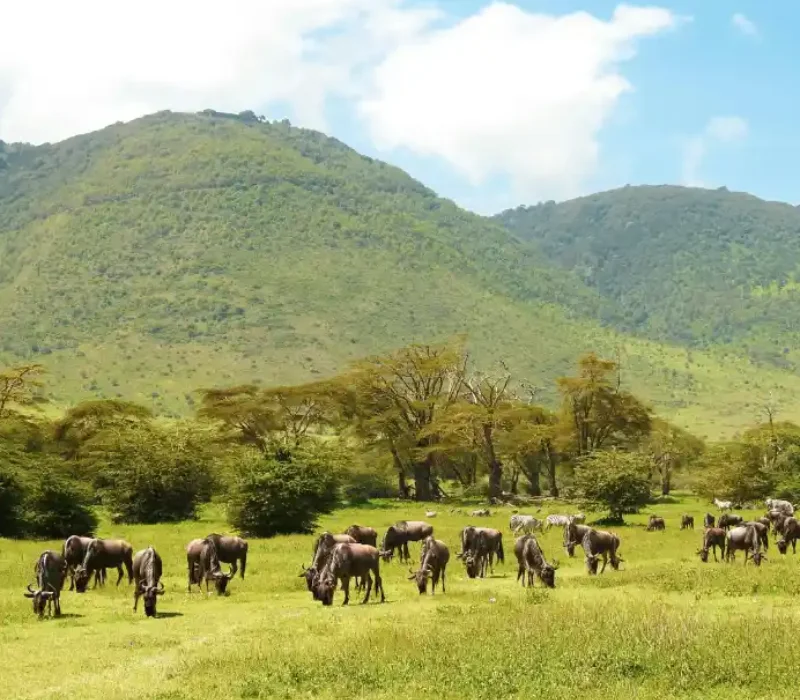
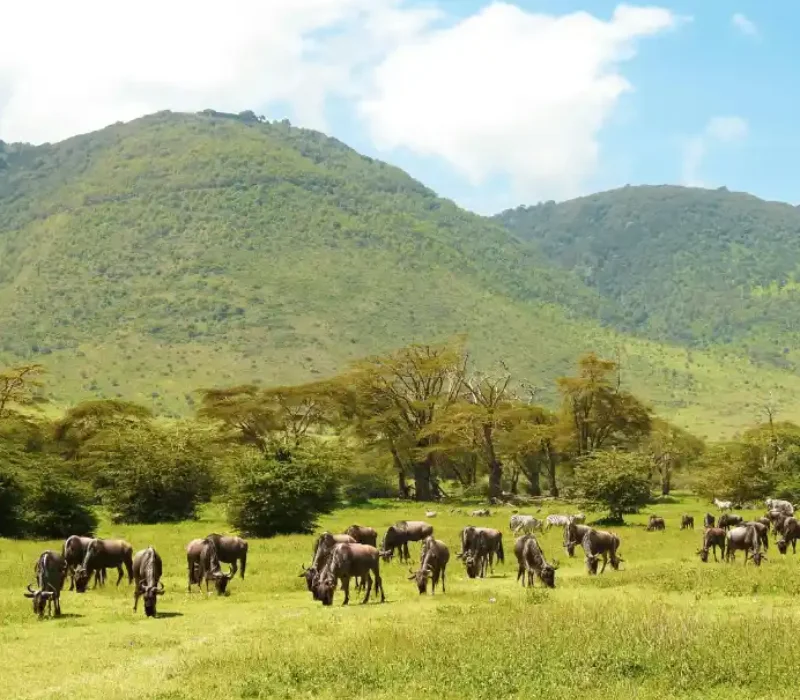
At the heart of the area is Ngorongoro Crater, the world's largest unbroken caldera. Its enclosed grasslands, wetlands and woodland habitats support a high concentration of wildlife, including lions, elephants, buffaloes, hippos, wildebeest, zebras and other grazing animals. The area also provides habitat for the endangered black rhinoceros.
Popular packages
Showing 0 packagesAll packages loaded for this destination.
Guide
About Ngorongoro
Beyond wildlife, Ngorongoro has exceptional archaeological significance. Olduvai Gorge and Laetoli have produced important evidence relating to human evolution, with discoveries spanning millions of years.
A Ngorongoro safari can be combined with the Serengeti, creating an itinerary that explores two closely connected ecosystems in northern Tanzania. Travelers can also combine the region with other destinations on Tanzania's northern safari circuit.
Ngorongoro Conservation Area
Ngorongoro Conservation Area is a protected landscape in northern Tanzania renowned for its extraordinary concentration of wildlife, dramatic volcanic scenery and deep archaeological significance. The area extends from the Serengeti plains toward the eastern arm of the Great Rift Valley and encompasses a diverse combination of highland plains, savannah, woodland and forest habitats.
Established in 1959, the Ngorongoro Conservation Area is distinctive because it combines wildlife conservation with traditional pastoral activities. Semi-nomadic Maasai communities live within the wider conservation landscape, where livestock grazing and wildlife coexist under the area's multiple-use management model.
The UNESCO World Heritage property covers approximately 809,440 hectares, while the broader Ngorongoro Conservation Area is approximately 8,292 square kilometres according to UNESCO documentation.
Ngorongoro Crater
The centerpiece of a Ngorongoro safari is the spectacular Ngorongoro Crater, the world's largest unbroken caldera. Its distinctive geological formation was created by volcanic activity and subsequent collapse, leaving a vast enclosed landscape containing grasslands, woodland and wetlands.
The crater's enclosed environment supports a remarkable concentration of wildlife throughout the year. Visitors may encounter lions, elephants, buffaloes, hippos, wildebeest, zebras, gazelles and other species during game drives.
The area is also an important habitat for the black rhinoceros, one of Africa's threatened large mammals. The combination of diverse habitats and relatively concentrated wildlife makes the crater a particularly important component of northern Tanzania's safari circuit.
Wildlife in Ngorongoro
Wildlife viewing is one of the major reasons travelers visit the conservation area. UNESCO records approximately 25,000 large animals within the property, predominantly ungulates, alongside substantial predator populations and numerous bird species.
The crater and surrounding conservation area provide habitat for large herbivores and predators, while the wider ecosystem connects with the Serengeti. Seasonal movements of wildebeest, zebras, gazelles and other grazing animals are an important ecological feature of the region.
For travelers planning a broader Tanzania safari, Ngorongoro is naturally suited to a multi-destination itinerary. A journey can combine the conservation area with Serengeti National Park, allowing visitors to experience both the crater's enclosed wildlife landscape and the expansive Serengeti plains.
Olduvai Gorge and Human History
Ngorongoro is significant not only for wildlife but also for the study of human evolution.
Olduvai Gorge, a deep archaeological and palaeontological site within the conservation area, has produced evidence relating to human evolution extending over millions of years. The wider property also includes Laetoli, where fossilized hominin footprints provide important evidence of early human ancestors.
These sites give Ngorongoro a unique combination of natural and cultural significance. UNESCO added cultural criteria to the property's World Heritage inscription in 2010 because of the exceptional evidence relating to human evolution and human-environment interactions.
Maasai Communities
The conservation area is also home to Maasai pastoral communities whose traditional livestock practices form part of the area's history and contemporary landscape.
Unlike a conventional national park, the Ngorongoro Conservation Area was established as a multiple land-use area, with conservation, pastoralism and tourism forming important components of its management framework.
Travelers interested in cultural experiences can learn about Maasai traditions and pastoral life through appropriately organized community experiences. Such visits should be conducted respectfully and through responsible tourism arrangements.
Planning a Ngorongoro Safari
A Ngorongoro safari is commonly incorporated into Tanzania's northern safari circuit. Its proximity and ecological connection to the Serengeti make it particularly practical to combine the two destinations within one itinerary.
Travelers can begin their journey around Arusha before visiting Ngorongoro and continuing toward Serengeti National Park. Depending on the itinerary, additional destinations can be included to create a longer Tanzania wildlife journey.
Wild Plush Safaris can help travelers design a Tanzania itinerary around wildlife viewing, photography, cultural experiences, accommodation preferences and available travel time.
For authoritative information about Ngorongoro's conservation and World Heritage status, visitors can consult the UNESCO World Heritage Centre. UNESCO identifies the Ngorongoro Conservation Area as a property of outstanding natural and cultural significance.
For travelers interested in combining Tanzania with Kenya, Ngorongoro can also be incorporated into a broader East African safari, connecting the Serengeti-Mara ecosystem with destinations such as Kenya's Maasai Mara.
Map
Ngorongoro map
-3.187220, 35.540830
Destination FAQs
What is Ngorongoro Conservation Area famous for?
Ngorongoro is famous for the spectacular Ngorongoro Crater, its high concentration of wildlife, Maasai pastoral communities and archaeological sites associated with human evolution.
What animals can you see in Ngorongoro Crater?
Visitors may encounter lions, elephants, buffaloes, hippos, wildebeest, zebras, gazelles and other wildlife. The conservation area also provides habitat for the endangered black rhinoceros
Is Ngorongoro Crater part of the Serengeti?
Ngorongoro Crater is not part of Serengeti National Park. It is within the separate Ngorongoro Conservation Area, but the two areas are ecologically connected and form part of the wider Serengeti ecosystem.
Why book Ngorongoro with us?
- Tailored itineraries: We design every itinerary with local insight and flexible travel dates.
- Trusted local teams: Our guides, transfers, and accommodation partners are selected for comfort and reliability.
- Simple planning: Get itinerary support, transport, and booking assistance from one dedicated team.


